
Chiropractic Tips, Pain Relief & Wellness in Pleasant Grove
Explore chiropractic tips, pain relief strategies, injury recovery information, and wellness advice from Dr. Bruce Lowry. Serving Pleasant Grove and surrounding Utah County communities, our blog covers topics related to back pain, neck pain, headaches, posture, mobility, and everyday health.
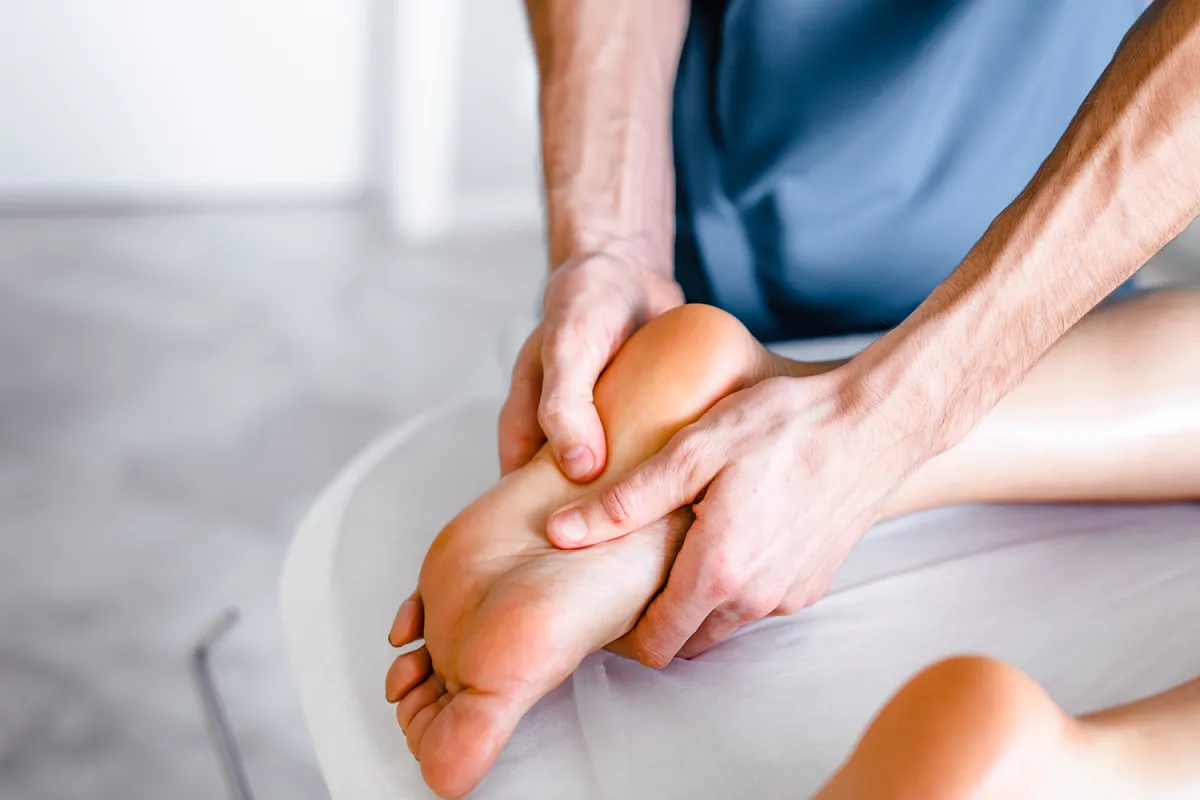
Why Your Mid-Foot Starts Aching After Working the Brake and Gas in Stop-and-Go Traffic on I-15
Why Your Mid-Foot Starts Aching After Working the Brake and Gas in Stop-and-Go Traffic on I-15
If your foot starts aching after a long commute, school pickup loop, or repeated stop-and-go traffic on I-15, you may wonder why such a basic activity suddenly feels so irritating. Many people expect foot pain to come from running, hiking, or a sports injury. But for some drivers in Pleasant Grove and throughout Utah County, the problem starts with something much less obvious: repeatedly moving the right foot between the brake and gas pedal.
When that motion is done over and over, especially in a tense driving position or with the foot held at an awkward angle, the middle of the foot can become sore, stiff, or fatigued. In some cases, the ankle, calf, or even the knee may also start to feel off. The good news is that this type of irritation often has a mechanical cause, which means identifying the source matters.
Why stop-and-go driving can irritate the mid-foot
Driving seems simple, but your right foot does a surprising amount of repetitive work. In heavy traffic, it may hover above the pedals, press down, lift quickly, rotate slightly inward or outward, and hold tension for long stretches. That repeated motion can stress the joints, muscles, and soft tissues across the top, bottom, or inside of the mid-foot.
The mid-foot plays an important role in stability. It helps transfer force between the heel and the front of the foot. When you spend a lot of time pressing pedals with the foot slightly pointed, twisted, or unsupported, the tissues in that area can become overloaded. This is even more likely if:
- You commute long distances
- You drive a vehicle with a seating position that keeps your foot awkwardly angled
- You wear stiff boots, unsupportive flats, or bulky shoes while driving
- You already have limited ankle mobility
- You tend to grip or tense your foot when traffic is stressful
What this kind of foot pain may feel like
Not everyone describes it the same way. Some people notice a dull ache across the arch or middle of the foot. Others feel soreness on the top of the foot, burning near the inside edge, or fatigue that gets worse the longer they drive. Sometimes the foot feels fine when walking around the house, but starts acting up during a commute or right after getting out of the car.
You might notice:
- Aching in the middle of the foot after driving
- Stiffness when you first stand up after a long ride
- Soreness that seems worse with brake use than gas pedal use
- Tightness in the calf or front of the ankle on the same side
- A sense that your right foot is working harder than it should
These patterns can point toward joint restriction, irritated soft tissue, or compensation caused by how the ankle and foot are moving together.
Why it is not always “just your foot”
One reason this issue can be frustrating is that the pain is felt in the foot, but the source of stress may involve more than the foot alone. The ankle has to move smoothly. The calf has to allow the foot to flex without excessive strain. The knee and hip affect how the leg rests while you sit. Even the position of your pelvis in the driver’s seat can change how your foot reaches the pedals.
If one part of that chain is not moving well, another part often picks up the slack. For example, if the ankle is stiff, the mid-foot may twist more than it should. If the hip is rotated inward because of your seat position, the foot may land on the pedal at an angle. Over time, that repeated compensation can create irritation.
Common real-life situations that can trigger it
This problem often shows up in very ordinary routines. A few examples include:
- A daily commuter driving from Pleasant Grove to Provo, Lehi, or Salt Lake in rush-hour traffic
- A parent spending extra time in school pickup lines and after-school carpools
- A salesperson, contractor, or home health worker who drives from stop to stop all day
- A rideshare or delivery driver who uses the pedals constantly without much rest
- Someone who recently changed vehicles and now sits differently behind the wheel
Because the pain develops during such a common activity, many people ignore it at first. They assume it will go away on its own, or they blame their shoes. Sometimes it does settle down. But when it keeps returning, it is worth taking a closer look.
How chiropractic care may help
Chiropractic care can be helpful when the issue involves joint mechanics, movement restrictions, and compensation patterns in the foot and leg. At Dr. Bruce Lowry’s office, the goal is to understand what is not moving well and why the area keeps getting irritated.
That may include evaluating:
- How the foot and ankle joints are moving
- Whether the calf and lower leg are contributing to tension
- How the knee and hip are affecting foot position while seated
- Whether one side of the pelvis is changing your driving posture
- How your symptoms behave during walking versus driving
When appropriate, care may focus on improving joint motion, reducing mechanical stress, and helping the body move more comfortably as a whole. For some patients, that means addressing not only the foot, but also the ankle, lower leg, and related areas that influence it.
Small adjustments that may reduce aggravation
While treatment addresses the underlying mechanics, a few practical changes may also help reduce irritation during daily driving:
- Adjust your seat so you are not reaching too far with the right foot
- Avoid driving in shoes that are overly stiff, unstable, or bulky
- Take short breaks to walk if you are on the road for long periods
- Notice whether you keep the right foot tensed even when you do not need to
- Pay attention to whether symptoms are worse in one vehicle than another
These are not always enough to solve the problem by themselves, but they can reduce repeated stress while the area calms down.
When to get it checked
If your foot hurts once after a long day of driving and then fully settles, it may simply need some rest. But if the pain keeps returning with commuting, gets more noticeable in traffic, or starts affecting how you walk, it is a good idea to have it evaluated.
You should also pay closer attention if:
- The pain is becoming more frequent
- You are changing how you step because of it
- Your ankle, calf, or knee is starting to hurt too
- You feel stiffness every time you get out of the car
- It is interfering with work, errands, or daily routines
The sooner a recurring mechanical issue is identified, the easier it may be to prevent it from becoming a bigger limitation.
FAQ
Can driving really cause foot pain even if I do not exercise much?
Yes. Repetitive pedal use, especially in heavy traffic, can put ongoing stress on the foot and ankle even without sports or intense exercise.
Why is it only my right foot?
Your right foot does almost all of the active work on the pedals, so it is much more likely to develop irritation related to driving mechanics.
Should I worry if the pain is mostly an ache and not severe?
Mild pain can still point to a recurring mechanical problem. If it keeps showing up during driving, it is worth getting checked before it becomes more limiting.
Can chiropractic care help if the problem seems to be in my foot?
In many cases, yes. If the issue involves restricted motion or compensation in the foot, ankle, or related joints, chiropractic evaluation and care may help address the cause.
Schedule an appointment in Pleasant Grove
If your mid-foot starts aching during your commute or after long stretches of stop-and-go driving, you do not have to keep guessing about it. Dr. Bruce Lowry provides chiropractic care for patients in Pleasant Grove and nearby Utah County communities who are dealing with mechanical pain patterns that affect daily life. If you are ready to find out why your foot keeps hurting and what can be done about it, contact the office to schedule an appointment.

Looking for Relief From Back or Neck Pain?
Schedule an appointment with Dr. Bruce Lowry, your trusted chiropractor in Pleasant Grove, UT.
What Our Patients Say
See why patients throughout Pleasant Grove and Utah County trust Dr. Bruce Lowry for personalized chiropractic care and long-term pain relief.

The chiropractor took the time to listen to my concerns and thoroughly explain the treatment process.I recently had the pleasure of visiting a chiropractor for the first time and I couldn't be happier with the experience. From the moment I walked in, the staff made me feel welcome and at ease. The chiropractor took the time to listen to my concerns and thoroughly explain the treatment process.

Brandon Pymm
Dr. Lowry is an excellent chiropractor. I've been a patient of his for a few years now and feel so much better with the adjustments he's done on my back and spine. I recommend him to all my friends in the area!
Jane Sau
I really enjoyed my visit with Dr. Lowry. It was my first time being adjusted and I was a bit nervous. He talked me through everything he was doing and helped me understand there was nothing to be nervous about. I really appreciated it because he made the whole experience really smooth and enjoyable.