Chiropractic Tips, Pain Relief & Wellness in Pleasant Grove
Explore chiropractic tips, pain relief strategies, injury recovery information, and wellness advice from Dr. Bruce Lowry. Serving Pleasant Grove and surrounding Utah County communities, our blog covers topics related to back pain, neck pain, headaches, posture, mobility, and everyday health.
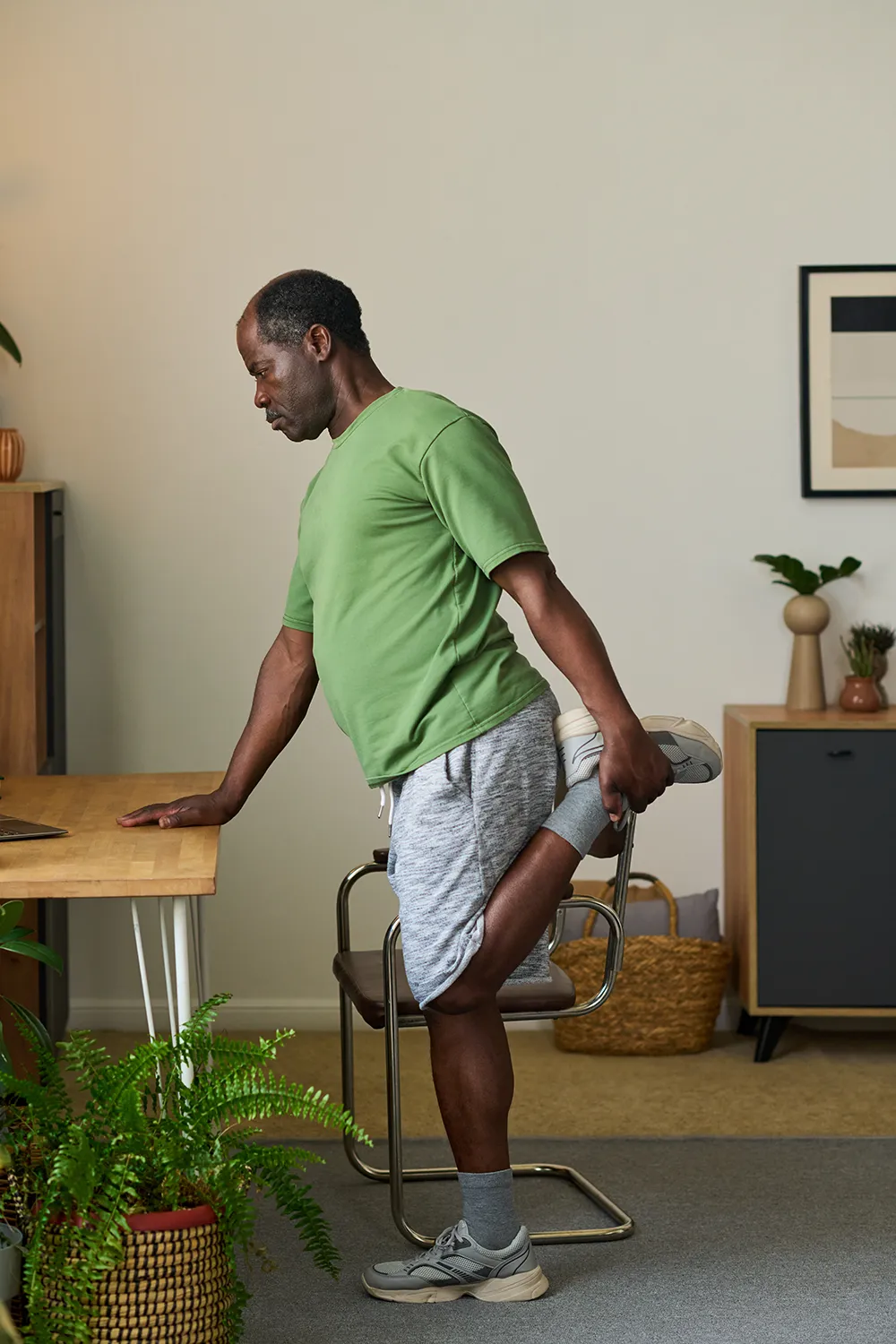
Why Your Calf Feels Tight and Your Heel Starts Hurting After Using a Standing Desk All Day
Why Your Calf Feels Tight and Your Heel Starts Hurting After Using a Standing Desk All Day
Standing desks have helped many people in Pleasant Grove and across Utah County break up long hours of sitting. But for some people, switching from a chair to standing most of the day creates a new problem: a tight calf, an aching heel, or a pulling sensation along the bottom of the foot.
If that sounds familiar, you are not imagining it. A standing desk can be helpful, but when your body is not prepared for the change, the extra load on your feet, calves, ankles, and lower back can add up quickly. The result may feel like heel pain when you take your first steps in the morning, calf tension that never seems to loosen up, or soreness that gets worse by the end of the workday.
At Dr. Bruce Lowry Chiropractic, we see how everyday routines can create very specific patterns of strain. The good news is that this kind of pain often has a clear cause, and with the right care, it can usually be improved.
Why a standing desk can trigger calf and heel pain
When you stand for longer periods than your body is used to, your muscles and joints have to manage continuous low-level demand. That is especially true in the calves and feet. Unlike walking, standing does not create much variety in movement. You may be upright for hours, but your body is often staying in the same position with very little change.
That can lead to:
Increased tension in the calf muscles and Achilles tendon
More pressure through the heel and arch
Reduced ankle mobility
Fatigue in the small stabilizing muscles of the feet
Compensation in the knees, hips, pelvis, and low back
Many people also lock their knees, lean into one hip, or shift their weight unevenly without realizing it. Over time, that can change how force travels through the lower body and increase stress on one side more than the other.
Common symptoms people notice
The discomfort does not always start dramatically. It often builds gradually over a few days or weeks after changing your workstation setup or trying to stand more during the day.
You might notice:
Tight calves that feel worse by afternoon
Pain at the bottom of the heel when you first get out of bed
A pulling or burning feeling along the arch
Soreness near the Achilles tendon
Foot fatigue while standing at your desk
Stiff ankles or a feeling that your steps are less smooth
Low back or hip tension that appeared around the same time
For some people, the pain is strongest after they sit down and then stand back up. For others, the heel hurts most in the morning, even though the standing desk seems to be the thing that started the problem.
Why the issue is often bigger than just the heel
It is easy to focus only on where the pain is. If your heel hurts, it seems like the heel must be the whole problem. But the body works as a chain, and heel pain often reflects stress coming from other areas.
If the ankle is not moving well, the calf stays tight. If the calf stays tight, it can increase pulling on the heel and foot. If your hips or pelvis are shifting your weight unevenly, one foot may absorb more pressure all day long. Even your low back can influence how you stand and distribute force through your legs.
That is one reason self-care alone does not always solve the issue. Ice, rest, or changing shoes may help temporarily, but if the movement pattern and joint restriction remain, the pain can keep returning.
What tends to make it worse
Several habits can make standing-desk-related heel and calf pain more likely:
Going from mostly sitting to standing for several hours a day too quickly
Standing on a hard floor without supportive footwear
Keeping the desk at a height that causes you to lean forward
Shifting weight mostly onto one leg
Not moving much while standing
Using worn-out shoes or very flat shoes with little support
Already having limited ankle mobility from a past injury or old sprain
This is common for people who work from home, office professionals who recently changed their setup, and anyone trying to be healthier by standing more without a gradual transition.
How chiropractic care can help
Chiropractic care is not just about the spine. For this kind of problem, a thorough evaluation can help identify where your body is moving well and where it is not. That may include the feet, ankles, knees, hips, pelvis, and low back.
At our office, care may focus on improving joint motion, reducing mechanical stress, and helping your body move more evenly. When the ankle and foot are not working properly, the calf often stays under extra tension. When the pelvis or low back is not moving well, standing can become more tiring and uneven.
Depending on your needs, care may include:
Assessment of standing posture and weight distribution
Gentle chiropractic adjustments to restricted joints
Evaluation of ankle, foot, hip, and pelvic mechanics
Recommendations for workstation changes
Guidance on pacing your standing time more effectively
The goal is not simply to cover up the symptom. It is to address the strain pattern that is feeding the symptom.
Practical steps you can start right away
If you suspect your standing desk is contributing to your pain, these simple changes may help:
Alternate between sitting and standing instead of standing for long uninterrupted periods
Use a supportive mat if you stand on a hard surface
Wear shoes with good support rather than going barefoot all day
Shift positions often and avoid locking your knees
Keep your desk height comfortable so your shoulders stay relaxed
Gradually build up standing time instead of making a sudden all-day change
Take short walking breaks throughout the day
These steps can reduce stress, but if your symptoms are persisting, it is worth having the problem evaluated instead of waiting for it to become more stubborn.
When to get checked
If your heel pain or calf tightness has lasted more than a couple of weeks, keeps coming back, or is starting to affect how you walk, it is a good time to get it looked at. The sooner mechanical problems are identified, the easier they often are to correct.
You should also get evaluated if:
The pain is strongest first thing in the morning
You are limping or changing how you walk
The tightness is interfering with work or exercise
You have a history of ankle injuries
The pain started after a workstation change and has not settled down
People in Pleasant Grove, Lindon, American Fork, and nearby Utah County communities often assume they just need better shoes or more stretching. Sometimes that helps, but sometimes the real issue is how the lower body and spine are functioning together.
FAQ
Can a standing desk really cause heel pain?
Yes. If you increase standing time too quickly or stand in poor positions for hours, it can overload the feet, calves, and heels, especially if there are already mobility or alignment issues.
Is this the same as plantar fasciitis?
Heel pain from standing all day can involve the same tissues often associated with plantar fascia irritation, but not every case is identical. That is why an exam matters. The source of the strain may include the foot, ankle, calf, hips, or low back.
Should I stop using my standing desk?
Not necessarily. Many people do better by adjusting how they use it rather than abandoning it completely. Alternating positions, improving support, and addressing underlying joint restrictions can make a big difference.
Can chiropractic care help if the pain is in my foot?
Yes. Chiropractic care can help evaluate and address movement problems in the feet, ankles, legs, pelvis, and spine that may be contributing to your symptoms.
Get help before the pain becomes your new normal
If your calf feels tight and your heel has started hurting after using a standing desk, do not ignore it and hope it goes away on its own. Small strains often become bigger problems when they are repeated every workday.
Dr. Bruce Lowry provides chiropractic care for patients in Pleasant Grove and throughout Utah County who want practical, personalized care for everyday musculoskeletal problems. If you are dealing with heel pain, calf tension, or standing-related discomfort, schedule an appointment today and find out what is really driving the problem.

Looking for Relief From Back or Neck Pain?
Schedule an appointment with Dr. Bruce Lowry, your trusted chiropractor in Pleasant Grove, UT.
What Our Patients Say
See why patients throughout Pleasant Grove and Utah County trust Dr. Bruce Lowry for personalized chiropractic care and long-term pain relief.

The chiropractor took the time to listen to my concerns and thoroughly explain the treatment process.I recently had the pleasure of visiting a chiropractor for the first time and I couldn't be happier with the experience. From the moment I walked in, the staff made me feel welcome and at ease. The chiropractor took the time to listen to my concerns and thoroughly explain the treatment process.

Brandon Pymm
Dr. Lowry is an excellent chiropractor. I've been a patient of his for a few years now and feel so much better with the adjustments he's done on my back and spine. I recommend him to all my friends in the area!
Jane Sau
I really enjoyed my visit with Dr. Lowry. It was my first time being adjusted and I was a bit nervous. He talked me through everything he was doing and helped me understand there was nothing to be nervous about. I really appreciated it because he made the whole experience really smooth and enjoyable.