
Chiropractic Tips, Pain Relief & Wellness in Pleasant Grove
Explore chiropractic tips, pain relief strategies, injury recovery information, and wellness advice from Dr. Bruce Lowry. Serving Pleasant Grove and surrounding Utah County communities, our blog covers topics related to back pain, neck pain, headaches, posture, mobility, and everyday health.
Why Your Jaw Feels Tight and Your Ear Feels Full After Hours of Violin Practice
Why Your Jaw Feels Tight and Your Ear Feels Full After Hours of Violin Practice
If your jaw starts to feel tight, achy, or tired after violin practice, and you also notice a strange sense of ear fullness, you are not imagining it. This is a very real pattern that can show up in musicians who spend long periods with the violin tucked under the chin and shoulder. For students, teachers, and recreational players in Pleasant Grove and throughout Utah County, these symptoms can become frustrating enough to affect practice time, performance, sleep, and daily comfort.
While many people assume the problem is only in the jaw, the full picture is often more complicated. The way the jaw, neck, upper back, and surrounding muscles work together can create tension that builds gradually over time. Chiropractic care may help by addressing the mechanical stress contributing to that pattern.
Why violin practice can trigger jaw tightness
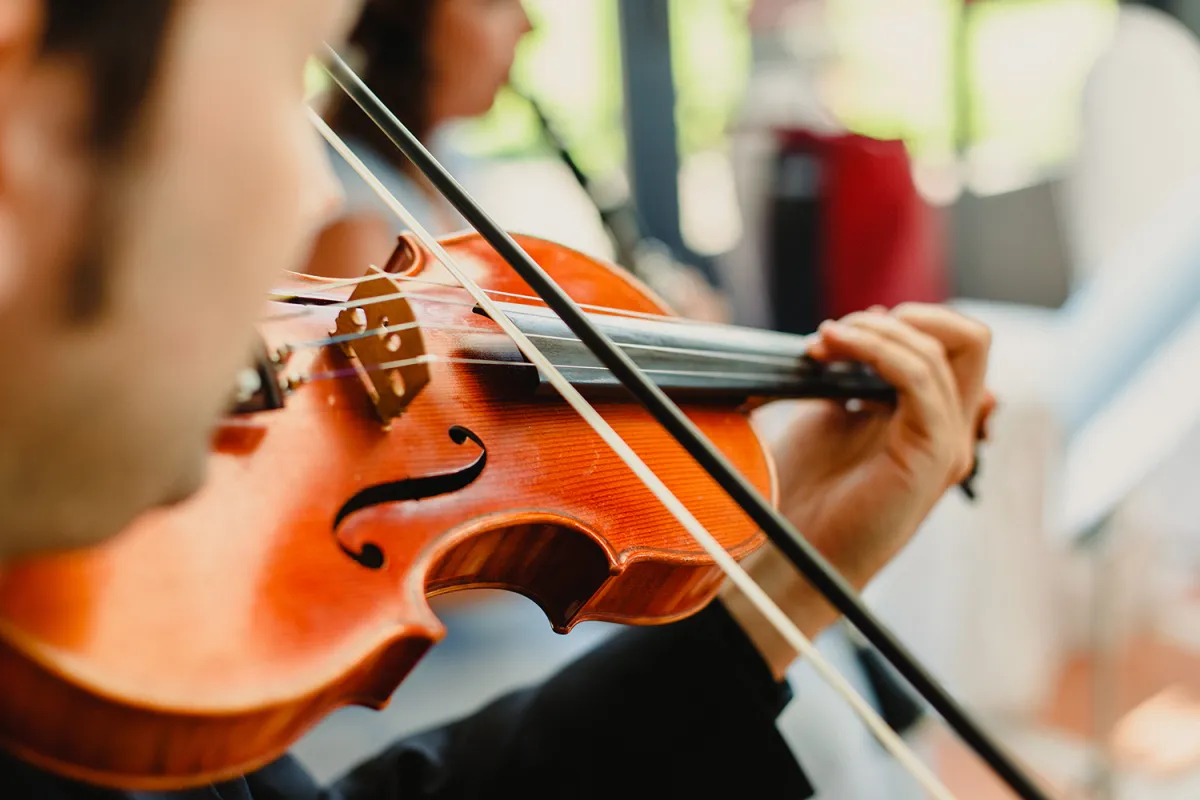
Playing the violin requires a very specific position. The instrument is supported between the jaw and shoulder while the head is often slightly turned and tilted. Even when your form is good, holding that position for long rehearsals or frequent practice sessions can place repeated stress on the muscles and joints around the jaw and neck.
Over time, several things may happen:
The jaw muscles may stay partially contracted for too long. The neck may become stiff from sustained rotation and side bending. The upper back and shoulder may lose normal movement. The temporomandibular joint, often called the TMJ, may become irritated if the jaw is clenching or bracing to stabilize the instrument.
When these issues stack together, it can lead to symptoms that seem unrelated at first, including jaw tension, facial fatigue, pressure near the ear, clicking, and even discomfort when chewing or talking after practice.
Why ear fullness can show up too
Ear fullness is one of those symptoms that can feel confusing. Some musicians describe it as pressure, muffled hearing, a clogged sensation, or a feeling that the ear needs to pop. While ear symptoms should always be taken seriously, they are not always caused by an ear infection or sinus problem.
The jaw joint sits very close to the ear. Tension in the surrounding muscles and irritation in the TMJ region can sometimes create sensations that feel like they are coming from the ear itself. In other cases, tightness in the upper neck can contribute to referred discomfort around the ear and jawline.
This is one reason a violinist may say, “My ear feels weird after practice,” when the underlying issue is actually a combination of jaw tension, neck restriction, and postural strain from playing position.
Signs your symptoms may be related to playing mechanics
Your discomfort may be connected to violin practice if you notice patterns like these:
- Your jaw feels tight mostly during or after playing
- You catch yourself clenching the jaw during difficult passages
- Your ear feels full on the same side that supports the violin
- You feel neck stiffness along with jaw fatigue
- Your symptoms are worse after orchestra rehearsals, lessons, or performance weeks
- You get temporary relief when you stop playing, change position, or gently move your neck
Even if the symptoms seem mild at first, repeated strain can make them more persistent over time.
What a chiropractor looks at in this situation
At Dr. Bruce Lowry’s office, an evaluation for this kind of complaint would not stop at the jaw alone. A chiropractor may look at how your neck moves, whether the upper back is restricted, how the shoulders are positioned, and whether muscle tension patterns are contributing to uneven stress on the jaw and surrounding tissues.
For violinists, the problem is often not one single injury. It is usually a repetitive positioning issue. That means the goal is to identify where your body is compensating and why certain areas are doing more work than they should.
This may include assessing:
- Neck mobility, especially rotation and side bending
- Upper thoracic spine movement
- Muscle tension around the jaw, neck, and shoulder girdle
- Postural habits during practice and performance
- Whether one side is consistently overloaded
How chiropractic care may help
Chiropractic care may help reduce mechanical stress in the areas contributing to your symptoms. Depending on your specific findings, care may focus on improving motion in the neck and upper back, reducing joint restriction, and helping surrounding muscles settle down.
For a violinist, that matters because a body that moves better usually does not need to brace as much to hold position. When the neck and upper back are less restricted, the jaw and shoulder may not have to compensate as aggressively during practice.
Care may also include practical guidance on activity modification. That might mean changing how long you practice before taking a break, noticing when you clench during technically demanding music, or looking at how your setup affects tension. Small adjustments in routine can make a meaningful difference when the problem is repetitive strain rather than a single event.
When not to ignore jaw and ear symptoms
Although musculoskeletal stress is common, not every case of jaw pain or ear fullness should be assumed to come from violin practice alone. It is important to get evaluated promptly if you have severe ear pain, hearing loss, dizziness, fever, swelling, trauma, or symptoms that continue to worsen.
A good rule is this: if the symptoms clearly increase with playing posture and improve with rest, a mechanical cause becomes more likely. But if the symptoms are constant, intense, or accompanied by other concerning changes, you may also need evaluation from a medical or dental provider.
Why this matters for student musicians and adult players in Utah County
In Pleasant Grove, Lindon, American Fork, and nearby communities, many musicians balance practice with school, work, commuting, and family responsibilities. It is easy to push through symptoms because a recital, audition, or concert is coming up. But waiting too long can make a manageable problem harder to calm down.
If you are a student preparing for orchestra events, a private lesson regular, or an adult returning to music after years away, your body may respond differently to repetitive practice than you expect. Addressing tension early can help you stay more comfortable and consistent.
FAQ
Can violin playing really affect the jaw?
Yes. The playing position can place repeated stress on the jaw, neck, and shoulder, especially during long practice sessions or if you tend to clench while playing.
Why does jaw tension sometimes feel like an ear problem?
The jaw joint is located very close to the ear. Tension and irritation in that area can create pressure or fullness that feels like it is coming from the ear.
Should I stop practicing completely?
Not always. In many cases, reducing aggravating practice time, taking more frequent breaks, and getting the problem evaluated is more realistic than complete rest. The right plan depends on how severe your symptoms are.
Can chiropractic care help if the problem is repetitive strain?
It may. Chiropractic care can help address movement restrictions and tension patterns in the neck and upper back that may be contributing to repeated stress during playing.
Get your symptoms checked before they become your new normal
If your jaw feels tight, your ear feels full, or your neck and shoulder tense up after violin practice, it may be time to look beyond the instrument itself. Dr. Bruce Lowry provides chiropractic care for patients in Pleasant Grove and surrounding Utah County communities who are dealing with specific movement-related problems that interfere with daily life and activities they enjoy.
If you are ready to find out what may be causing your symptoms, contact our office today to schedule an appointment.

Looking for Relief From Back or Neck Pain?
Schedule an appointment with Dr. Bruce Lowry, your trusted chiropractor in Pleasant Grove, UT.
What Our Patients Say
See why patients throughout Pleasant Grove and Utah County trust Dr. Bruce Lowry for personalized chiropractic care and long-term pain relief.

The chiropractor took the time to listen to my concerns and thoroughly explain the treatment process.I recently had the pleasure of visiting a chiropractor for the first time and I couldn't be happier with the experience. From the moment I walked in, the staff made me feel welcome and at ease. The chiropractor took the time to listen to my concerns and thoroughly explain the treatment process.

Brandon Pymm
Dr. Lowry is an excellent chiropractor. I've been a patient of his for a few years now and feel so much better with the adjustments he's done on my back and spine. I recommend him to all my friends in the area!
Jane Sau
I really enjoyed my visit with Dr. Lowry. It was my first time being adjusted and I was a bit nervous. He talked me through everything he was doing and helped me understand there was nothing to be nervous about. I really appreciated it because he made the whole experience really smooth and enjoyable.